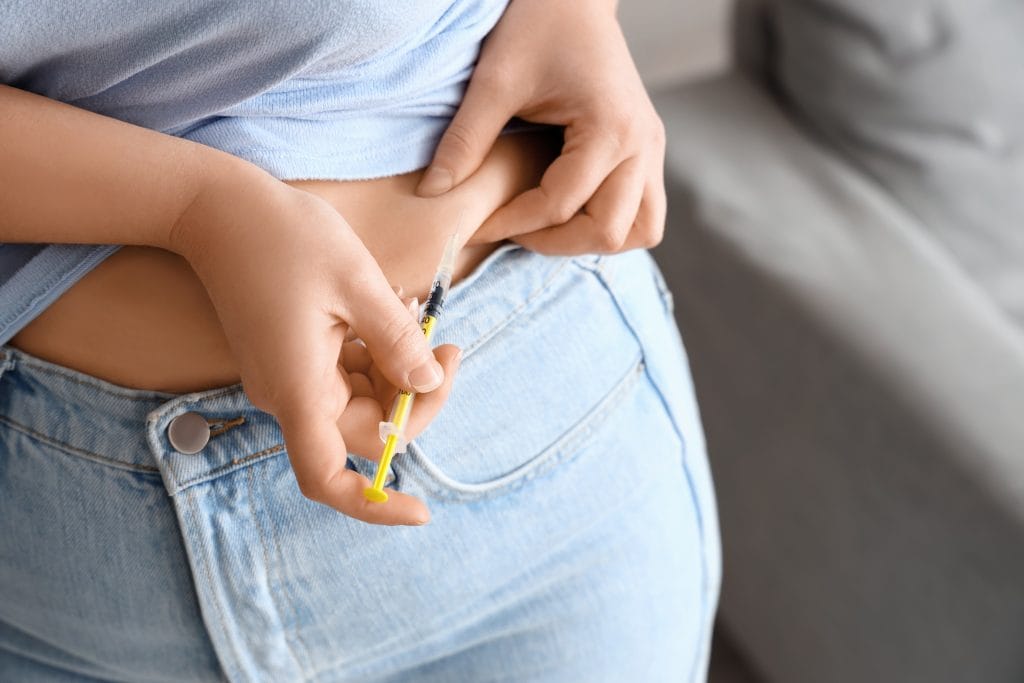
Ozempic starts acting on your body within days of the first injection, but the full effect takes weeks. Semaglutide levels peak 1 to 3 days after a dose and reach a steady level after about 4 to 5 weeks of once-weekly dosing (FDA prescribing information). Most people need 8 to 12 weeks before blood sugar and weight changes look convincing, and 3 to 6 months before the numbers settle.
The slow build is deliberate. The dose starts low and climbs in steps so your stomach has time to adjust, which means the first month is mostly about tolerance, not results.
What happens after the first dose of Ozempic
Some people notice a change in appetite within two or three days of the first injection. Others feel nothing at all, which is normal at the starting dose. Being still hungry after the first dose is not a sign the medicine has failed; it usually means the drug has not accumulated yet.
Early signals people report in week one:
- Smaller portions before you feel full
- Less pull toward snacking and late-night eating
- Meals sitting heavier because the stomach empties more slowly
- Mild nausea, burping, or constipation in the days right after an injection
- Lower fasting glucose readings if you test at home
Appetite change is the first thing that usually moves. Scale change follows it, not the other way around.
How long does it take for Ozempic to work after injection?
Semaglutide is injected under the skin and absorbed slowly. Blood levels reach their peak 1 to 3 days after each injection (FDA prescribing information), and the drug has a half-life of roughly one week. That long half-life is why the injection is weekly rather than daily.
Because each dose overlaps with the one before it, levels stack for about a month before they plateau. Your fifth injection produces a higher steady level than your first, even at the same milligram amount. That is the single most useful fact about the timeline.
Ozempic: What to Expect and When
- Days 1-3Drug peaks in blood; some notice appetite shift or mild nausea
- Weeks 1-40.25 mg tolerance phase; appetite begins to change, scale may not move
- Weeks 5-8Dose steps to 0.5 mg; appetite suppression becomes more noticeable
- Weeks 9-12Weight trend clear enough to judge; A1C recheck due
- Months 4-6Steady, slower loss; plateaus common
- Month 5+Drug clears ~5 weeks after last dose if stopped; appetite and glucose drift back
Why it matters: judging Ozempic in week two means judging it at roughly half the drug level you will eventually have.
Do you lose weight on 0.25 mg Ozempic?
Some people lose a few pounds on 0.25 mg, and some lose nothing. The label describes 0.25 mg once weekly for the first 4 weeks as a dose meant to build tolerance, not a treatment dose. Any early drop often reflects eating less food volume and losing some fluid rather than steady fat loss.
If the scale does not move on the starting dose, that is expected. The fair test comes after you have spent four weeks or more at the dose your clinician plans to hold.
First week and two weeks on Ozempic: what is normal
Two weeks on Ozempic with no weight loss is a common outcome, not a red flag. Day-to-day weight swings of 2 to 4 pounds from fluid, salt, and bowel habits can hide real progress at this stage.
Better early markers than the scale:
- How much of your usual plate you finish
- Whether you skip the snack you always used to want
- Waist measurement at the navel, taken once a week
- Fasting glucose trend if you have type 2 diabetes
- How long nausea lasts after each injection
Ozempic weight loss results by month
People search for Ozempic weight loss results by month because the first weeks feel like nothing is happening. The pattern below is the common shape of treatment, not a promise. Individual results vary a lot with dose, food intake, activity, and other medicines.
| Timeframe | What usually changes | What to track |
|---|---|---|
| Weeks 1 to 4 | Appetite starts to shift; side effects appear and often fade | Portion size, nausea pattern, fasting glucose |
| Weeks 5 to 8 | Dose steps up; appetite suppression becomes more obvious | Weekly weight trend, waist, energy |
| Weeks 9 to 12 | Weight trend becomes clear enough to judge | Total change since start, A1C recheck timing |
| Months 4 to 6 | Steady, slower loss; plateaus are common | Protein intake, strength training, dose plan |
| Months 6 to 12 | Results flatten toward a new maintenance point | Long-term plan, labs, side effect burden |
In the manufacturer’s diabetes trials, average weight change over 30 to 56 weeks was roughly 4 to 6 kg at the 0.5 mg and 1 mg doses (FDA prescribing information). Those trials studied blood sugar control, so weight was a secondary outcome, and higher-dose weight management products were studied separately.
If you want to sketch a pace you can actually defend rather than guessing, put in your starting weight and a weekly rate.
Weight loss timeline
How long a target is likely to take at a realistic rate, and what the trial percentages would put you at.
Trial averages are not promises: individual response varies widely, and results depend on staying on treatment. Faster than about 2 lb a week usually costs muscle.
How long does it take to lose 20 lbs on Ozempic?
Treat this as arithmetic, not a guarantee. At 1 pound a week, 20 pounds takes about 20 weeks. At half a pound a week, it takes closer to 40. Add 4 to 8 weeks at the front for the dose ramp, when loss is usually slower.
Two things bend that math. Loss is faster in the first months and slows as your body adjusts, so an early 2 pounds a week rarely holds for a year. And the dose you settle on matters: someone held at 0.5 mg will usually see less change than someone titrated higher for a different indication.
How long does it take for Ozempic to work for type 2 diabetes?
Fasting glucose often improves within the first one to two weeks, before any weight change. A1C moves more slowly because it reflects roughly three months of average blood sugar, so a recheck at 12 weeks is the usual first honest read.
In the SUSTAIN program, A1C fell by about 1.4 to 1.8 percentage points at the 0.5 mg and 1 mg doses (FDA prescribing information). Ozempic is indicated as an add-on to diet and exercise for adults with type 2 diabetes. It is not for type 1 diabetes and is not a treatment for diabetic ketoacidosis.
To turn an A1C figure into an estimated average glucose you can compare with your meter readings, use the converter below.
HbA1c and average glucose
Convert between the HbA1c on your lab report and the average glucose it represents, in either unit.
ADAG equation. HbA1c reflects roughly the last three months and can read falsely low with anaemia or recent blood loss.
Ozempic side effects timeline: how quickly they start
Gut side effects usually start within the first few days after an injection, and again after each dose increase. Nausea, reduced appetite, vomiting, diarrhea, constipation, and abdominal pain are the most common. For many people these ease over several weeks as the body adapts.
Serious problems are less common but need attention: pancreatitis, gallbladder disease, dehydration leading to kidney injury, and worsening of diabetic eye disease when blood sugar improves quickly. Low blood sugar becomes a real risk when semaglutide is combined with insulin or a sulfonylurea, so those doses are often adjusted.
Semaglutide carries a boxed warning for thyroid C-cell tumors seen in rodents, and it is contraindicated in people with a personal or family history of medullary thyroid carcinoma or MEN 2 per the approved labeling (FDA prescribing information). It is also not recommended in pregnancy, and it should be stopped well before a planned pregnancy.
The dose escalation schedule and why it stretches the timeline
The labeled ladder explains most of the wait:
- 0.25 mg once weekly for 4 weeks, to build tolerance
- 0.5 mg once weekly for at least 4 weeks
- 1 mg once weekly if more glucose control is needed
- Up to 2 mg once weekly as the maximum
Clinicians often stay on a step longer than the minimum when nausea is rough. That is a trade: slower results, easier weeks. If you tolerate a step well and your numbers have stalled, the dose plan is worth raising at your next visit.
What slows Ozempic down
- You are still in the ramp and have not reached a working dose
- Missed or late injections, which drop your steady level
- Liquid calories such as juice, sweet coffee, and alcohol, which slip past appetite suppression
- Low protein intake and no resistance training, so lost weight includes more muscle
- Other medicines that add weight, including some antidepressants, steroids, and insulin
- Short sleep and untreated sleep apnea
- A pen stored outside the labeled temperature range, which can affect the drug
Delayed stomach emptying can also change how fast other oral medicines are absorbed, which is worth flagging if you take something with a narrow safety margin.
Ozempic, Wegovy, and compounded semaglutide: does the timeline differ?
The active molecule is the same, so the pharmacology is the same: peak in 1 to 3 days, steady state in about a month. What differs is the approved use and the top dose. Ozempic is approved for type 2 diabetes and for reducing cardiovascular risk in adults with type 2 diabetes and established heart disease. Wegovy is the semaglutide product approved for weight management, titrated to a higher weekly dose.
Compounded semaglutide is a different situation. Those versions are not FDA-approved, concentrations vary between suppliers, and the FDA has reported dosing errors from patients drawing up the wrong volume. If your vial and syringe do not match the instructions you were given, stop and confirm before injecting.
How long does it take for Ozempic to get out of your system?
With a half-life of about one week, semaglutide takes roughly five weeks to clear after your last injection. Appetite usually returns gradually over that period rather than all at once, and blood sugar drifts back toward its untreated level.
That is also why weight regain is common after stopping. The medicine changes appetite while you take it; it does not permanently reset it. Any exit plan should include what replaces the appetite effect.
When to contact a clinician
Call promptly for severe or persistent abdominal pain, especially pain that radiates to the back, for vomiting that stops you keeping fluids down, for signs of dehydration such as very dark urine or dizziness on standing, for shaking, sweating, and confusion that suggest low blood sugar, for sudden vision changes, or for a lump in the neck, hoarseness, or trouble swallowing.
Storage matters too. Unused pens belong in the refrigerator until first use, and after first use a pen is used for a limited period, 56 days per the labeling (FDA prescribing information), then discarded.
What semaglutide costs while you wait for results
The timeline has a price tag. If a fair trial takes 12 weeks and a real read takes 6 months, budget for that stretch rather than for one month. Cash prices across telehealth clinics vary widely, from the low end to the high end of the range we track.
$99 to $499Coverage adds its own delay. Many plans require prior authorization, some require step therapy through metformin or another agent first, and weight management indications are excluded outright by a large share of employer plans. In a deductible phase you pay the full negotiated rate, and coinsurance on a specialty tier can cost far more than a flat copay. Ask the plan three questions: is this drug on formulary, at which tier, and what documentation does the authorization need.


No provider matches that filter. .
See every provider we track, with filters and sorting
What to do next
- Write down your start date, weight, waist, and A1C, so week 12 has a baseline to beat.
- Confirm the dose ladder you are on and when the next step is planned.
- Set a 12-week review rather than judging the first fortnight.
- Track portions and waist alongside weight, since the scale lags.
- Ask about protein targets and resistance training to protect muscle.
- Get your total monthly cost in writing, including visit fees and refills.
Before Judging Whether Ozempic Is Working
- Have you completed at least 4 weeks at your current dose (not just the 0.25 mg starter)?
- Are you tracking waist and portions, not just the scale?
- Are you injecting on the same day each week with no missed doses?
- Are liquid calories (juice, sweet coffee, alcohol) being counted?
- Is your pen stored correctly (refrigerated until first use, discarded after 56 days)?
- Have you scheduled a 12-week review with your clinician?
- If on insulin or a sulfonylurea, has that dose been reviewed for low-blood-sugar risk?
Quick tip: inject on the same day each week and set a reminder; late doses flatten the steady level that makes the medicine work.
Authoritative sources
- Official prescribing information for semaglutide injection (FDA)
- NIDDK guidance on medications used for overweight and obesity
- FDA safety information on semaglutide-containing medicines, including compounded versions
This content is for general informational purposes only and is not a substitute for professional medical advice, diagnosis, or treatment. Always consult a qualified clinician or pharmacist about your situation, and seek urgent care or call your local emergency number for severe or worsening symptoms.

