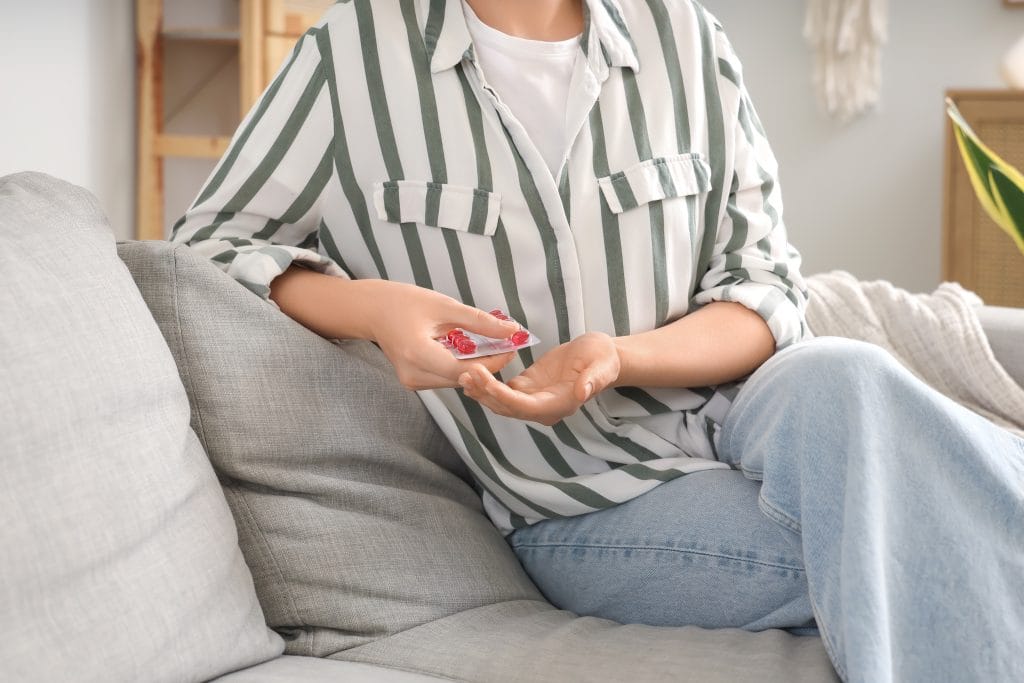
An oral GLP-1 is a once-daily tablet that acts on the same receptor as the weekly injections, so appetite drops, the stomach empties more slowly, and food stops feeling urgent. Two molecules define the category: oral semaglutide, sold as Rybelsus at diabetes strengths and studied as a 25 mg tablet for weight management, and orforglipron, a non-peptide pill working through late-stage trials and review. The real differences from a needle show up in three places: the strict empty-stomach routine, the monthly price, and how a plan classifies the prescription.
Which GLP-1 can be taken orally?
Only semaglutide has an established tablet form. Semaglutide is a peptide, and peptides are normally destroyed by stomach acid, so the tablet pairs the drug with an absorption enhancer called SNAC that protects it long enough to cross the stomach lining. Even then, only a small and somewhat variable fraction of each tablet reaches the bloodstream, which is why the oral strengths look nothing like the injection numbers.
Orforglipron is different by design. It is a small-molecule, non-peptide GLP-1 receptor agonist (a drug that switches on the same appetite receptor without being built like a hormone), so it does not need an absorption enhancer or the water-and-waiting routine. Treat it as a pipeline option, not a pharmacy shelf item, until your pharmacist confirms otherwise.
| Medicine | Form | Dosing rhythm | Main use |
|---|---|---|---|
| Oral semaglutide (Rybelsus) | Tablet: 3 mg, 7 mg, 14 mg | Once daily, empty stomach | Type 2 diabetes blood sugar control |
| Oral semaglutide 25 mg | Tablet | Once daily, empty stomach | Studied for chronic weight management |
| Orforglipron | Tablet, non-peptide | Once daily, no water rule in trials | Investigational for obesity and type 2 diabetes |
| Semaglutide (Ozempic, Wegovy) | Injection pen | Once weekly | Diabetes; chronic weight management |
| Tirzepatide (Mounjaro, Zepbound) | Injection | Once weekly | Diabetes; weight management, dual GIP and GLP-1 |
| Liraglutide (Victoza, Saxenda) | Injection | Once daily | Diabetes; weight management |
Novo Nordisk took a 25 mg oral semaglutide tablet through phase 3 obesity trials and filed it with the FDA under the Wegovy name. Ask your pharmacy what is actually stocked and at what strength before you plan a budget around it.
Why it matters: a Rybelsus prescription written for diabetes is not the same product or strength as a tablet intended for weight management.
Do oral GLP-1 pills work as well as injections?
Yes, when the dose is built for weight loss. In the phase 3 obesity program, 25 mg oral semaglutide produced average loss of roughly 13% to 14% of body weight over about 64 weeks (peer-reviewed review of oral GLP-1 trials), which lands in the same neighbourhood as weekly semaglutide injections. Those were separate trials, not head-to-head matchups, so treat the comparison as a range and not a scoreboard.
Two caveats decide whether the pill matches the pen for you. First, the diabetes strengths (3 mg, 7 mg, 14 mg) were built to lower A1c, not to drive double-digit weight loss, so expect smaller changes on the scale. Second, absorption depends on you following the routine every single morning; a coffee taken too early can quietly cut the dose you actually get.
Tirzepatide, which hits both GIP and GLP-1 receptors, has produced larger average weight loss in its own trials than any GLP-1 alone, oral or injected. If maximum reduction is the goal, that trade-off belongs in the conversation alongside needle preference.
Oral GLP-1 dosing and the 30 minute rule
The label routine is specific and non-negotiable for the semaglutide tablet.
Daily Routine for the Oral Semaglutide Tablet
- Wake up - stomach must be fully empty
- Swallow tablet whole with no more than 4 oz (120 mL) of plain water
- Wait at least 30 minutes before food, other drinks, or any other oral medicine
- Take remaining morning medications (e.g. levothyroxine) only after the wait window
- Swallow the tablet whole. Do not split, crush or chew it.
- Take it first thing after waking, on an empty stomach.
- Use no more than 4 ounces, about 120 mL, of plain water.
- Wait at least 30 minutes before food, other drinks, or any other oral medicine.
- Take only one tablet at a time; two smaller tablets do not equal one larger one.
Diabetes dosing usually starts at 3 mg daily for 30 days, then steps to 7 mg, then to 14 mg if more blood sugar control is needed. The weight management tablet titrates upward over several weeks to its maintenance strength for the same reason: slow escalation blunts nausea. If you miss a day, labels direct you to skip that dose and resume the next morning rather than doubling up.
The waiting window matters for other prescriptions too. Levothyroxine and other medicines with narrow absorption margins can be affected by that shared morning window, so bring your full medication list to the visit rather than sorting the timing yourself.
What an oral GLP-1 costs without insurance
List prices for branded GLP-1s sit far above what most people actually pay, because manufacturer cash programmes, pharmacy pricing and telehealth bundles all undercut them. The spread between the cheapest and most expensive route for the same molecule is usually the largest single variable in the decision.
Here is the tracked cash-price range for semaglutide across the providers in our dataset.
$99 to $499And here is how those providers line up on price.


No provider matches that filter. .
See every provider we track, with filters and sorting
Compare what a monthly figure actually buys before you compare the figures themselves. A quoted price may or may not include:
- The medication itself, and at which strength
- The initial clinician visit and any follow-ups
- Dose escalation without a new fee
- Lab work, if the clinician orders it
- Shipping, and whether pauses or cancellations are free
- Messaging support between visits
Annualise it before you commit, because GLP-1 treatment for obesity is framed as long-term therapy, not a 12 week course.
What a year actually costs
Programmes quote a monthly headline. Add the medication, the labs and the renewal price and the real number is usually different.
Advertised prices change often and intro pricing rarely lasts. Ask what the renewal rate is before you commit to a plan.
How insurance coverage works for a GLP-1 pill
Coverage usually turns on the diagnosis, not the drug. The same molecule is far more likely to be covered when it is prescribed for type 2 diabetes than when it is prescribed for obesity, because many commercial plans carry an explicit weight-loss drug exclusion. Medicare Part D has long been barred by statute from covering drugs used for weight loss, though coverage can apply when a covered indication such as diabetes is documented.
Assume you will meet at least one of these mechanics:
- Prior authorization: the plan wants documentation of BMI, weight-related conditions, and prior attempts at lifestyle change before it approves.
- Step therapy: you must try and fail a cheaper option, sometimes an older drug or a different GLP-1, first.
- Formulary tier: a specialty or non-preferred tier can mean coinsurance, a percentage of the drug cost, instead of a flat copay.
- Deductible phase: until the deductible is met, you may pay close to the plan’s negotiated price.
- Quantity limits and re-authorization: approvals often expire and require proof of weight or A1c response to renew.
Run both routes with real numbers before you assume insurance wins. A high-deductible plan with coinsurance sometimes costs more per month than a flat cash price.
Insurance or cash pay, which is cheaper
Going through insurance is not automatically cheaper. Deductibles, copays and prior authorisation can make a cash-pay programme the better deal.
Coverage is never something a programme can promise: plans decide, prior authorisation is routine for GLP-1 medicines, and denials are common. Confirm with your own plan before choosing.
These providers work with insurance for semaglutide prescriptions.


No provider matches that filter. .
See every provider we track, with filters and sorting
Getting an oral GLP-1 prescription online
A telehealth visit for an oral GLP-1 for weight loss follows a predictable shape: intake forms covering height, weight, medical history and medications; a clinician review; then a prescription sent to a pharmacy if you qualify. Weight-management labels generally define candidates as adults with a BMI of 30 or above, or 27 or above with a weight-related condition such as high blood pressure, high cholesterol, sleep apnea or type 2 diabetes.
BMI calculator
Most weight-loss programmes screen on BMI before they will prescribe. This is the number they will use.
A screening number, not a diagnosis. It does not distinguish muscle from fat, and it reads high for muscular builds.
Not every telemedicine service handles the same molecules, and some only stock injections. Ask directly whether the tablet is available and at which strength, since a service that cannot supply it will often steer you to what it has.
Best on value
What you get for what you pay.
- Found8.9 / 10
- ShedRx8.2 / 10
- Henry Meds8.2 / 10
- Lumimeds8 / 10
- Amble8 / 10
Lowest monthly price
Cheapest verified plan for a new self-pay patient.
- Amazon One Medical$17/mo
- LifeMD$19/mo
- PlushCare$20/mo
- Hims$22/mo
- Strut Health$25/mo
Ranked from our own scores, recomputed as data changes. Providers cannot pay for a place.
Red flags worth walking away from:
- No named clinician and no way to reach one about side effects
- Dose increases that trigger a new charge each time
- A quoted price that only holds for the first month
- No option to pause treatment while keeping your records
- Marketing that promises a specific number of pounds
Side effects, warnings and who should not take it
Most side effects are digestive and show up during dose increases. Common ones include nausea, vomiting, diarrhea, constipation, stomach pain, burping, reflux and reduced appetite that can tip into skipped meals. They usually ease as the body adjusts, and slower titration is the standard response.
The serious risks are the ones worth memorising:
- Thyroid C-cell tumors: semaglutide carries a boxed warning based on rodent studies. It is contraindicated if you or a close relative has had medullary thyroid carcinoma, or if you have multiple endocrine neoplasia syndrome type 2.
- Pancreatitis: severe, persistent stomach pain that may radiate to the back needs urgent assessment.
- Gallbladder problems: rapid weight loss raises gallstone risk; watch for right upper abdominal pain, fever or yellowing skin.
- Dehydration and kidney injury: prolonged vomiting or diarrhea can worsen kidney function, especially alongside diuretics or blood pressure medicines.
- Low blood sugar: the risk climbs sharply when a GLP-1 is combined with insulin or a sulfonylurea, and those doses often need adjusting by the prescriber.
- Diabetic retinopathy: rapid improvement in blood sugar can temporarily worsen existing eye disease, so tell your clinician if you have it.
- Delayed stomach emptying: tell any surgeon or anesthesiologist you take a GLP-1, because retained stomach contents raise aspiration risk during sedation.
- Pregnancy: these medicines are not used during pregnancy, and planning ahead matters because a washout period applies.
Sensible monitoring covers weight, blood pressure, A1c if you have diabetes, kidney function when symptoms suggest dehydration, and a check that you are eating enough protein rather than simply eating less. Call a clinician for severe or persistent vomiting, signs of dehydration, intense abdominal pain, or symptoms of low blood sugar such as shaking, sweating and confusion.
Compounded oral GLP-1 liquid: what the reviews leave out
Semaglutide sold as oral drops or a sublingual liquid is a compounded preparation, not an approved product, and it has not been through the trials that support the tablet. Three practical problems follow. Potency can vary between batches, so the dose you think you are taking may not be the dose you get. Instructions are often written in drops or units, which invites arithmetic errors. And absorption through the mouth or gut for a peptide this fragile is not well established outside the formulation the tablet uses.
Online reviews of these liquids describe appetite effects, which is not evidence of consistent dosing. If cost is what pushed you toward a compounded liquid, price the approved tablet and the injection first, including manufacturer cash programmes, before accepting an unapproved format.
What happens if you stop
Appetite generally returns within weeks of stopping, and weight regain is common; blood sugar tends to drift back toward its pretreatment level in people with diabetes. That is not a failure of willpower, it is how the medicine works: remove the receptor signal and hunger cues come back. Trial follow-ups have consistently shown regain after withdrawal, which is why clinicians increasingly discuss GLP-1 therapy as ongoing rather than temporary.
If you need to stop for cost, supply or side effects, ask about a plan rather than quitting cold. That conversation covers whether a lower maintenance strength is reasonable, what to do about diabetes medicines that were reduced while you were on the GLP-1, and what nutrition and resistance training can protect.
What to do next
- Write down your BMI, weight-related conditions and current medications, including any thyroid history.
- Call your plan and ask three questions: is this molecule on the formulary, is obesity an excluded indication, and what does prior authorization require.
- Get the cash price for the tablet and the injection so you know your fallback before the appointment.
- Ask any online service whether the oral tablet is stocked, at which strengths, and whether dose changes cost extra.
- Agree on a follow-up point with your clinician, so a stalled response or rough side effects get addressed rather than absorbed.
Before Your First Oral GLP-1 Appointment
- Note your BMI and any weight-related conditions (high BP, sleep apnea, type 2 diabetes)
- List all current medications, including thyroid drugs and timing-sensitive prescriptions
- Ask your insurer: is this molecule on formulary, is obesity excluded, what does prior auth require?
- Get the cash price for both the tablet and the injection as a fallback
- Confirm the online or telehealth service stocks the oral tablet at the right strength
- Ask whether dose escalation triggers an extra charge
Authoritative sources
- Peer-reviewed review of oral GLP-1 receptor agonist therapy
- Academic medical centre trial report on an oral GLP-1 in type 2 diabetes
- Association of American Medical Colleges analysis of GLP-1 pills in obesity care
This content is for general informational purposes only and is not a substitute for professional medical advice, diagnosis, or treatment. Always consult a qualified clinician or pharmacist about your situation, and seek urgent care or call your local emergency number for severe or worsening symptoms.
Frequently asked questions
Which GLP-1 can be taken orally?
Semaglutide is the GLP-1 with an established tablet form. It is sold as Rybelsus in 3 mg, 7 mg and 14 mg strengths for type 2 diabetes, and a 25 mg tablet was developed for chronic weight management. Orforglipron, a non-peptide once-daily pill, has been studied in late-stage obesity and diabetes trials. Tirzepatide, dulaglutide and liraglutide remain injection-only.
Do oral GLP-1 pills work as well as injections for weight loss?
At weight-management doses, average results have landed in a similar range to weekly semaglutide injections, though the trials were run separately rather than head to head. Diabetes strengths of the tablet were designed to lower A1c, so they produce smaller changes on the scale. Tirzepatide, which acts on two receptors, has produced larger average weight loss in its own trials than any GLP-1 alone.
What are the disadvantages of oral semaglutide?
The routine is strict: one tablet on an empty stomach, no more than 4 ounces of plain water, and a 30 minute wait before food, other drinks or other oral medicines. Absorption is low and can vary, so a missed step can reduce the effective dose. Daily dosing also means 30 chances a month to slip, versus four injections, and digestive side effects still apply.
How much does an oral GLP-1 cost per month?
Cash prices vary widely by molecule, strength and where the prescription is filled, and manufacturer cash programmes often sit well below list price. Coverage usually depends on the diagnosis, since many plans exclude drugs prescribed for weight loss while covering the same molecule for type 2 diabetes. Compare the total monthly figure, including visits, dose changes and shipping, not just the drug price.
What side effects should I expect from a GLP-1 pill?
Nausea, vomiting, diarrhea, constipation, stomach pain and reduced appetite are the common ones, and they usually peak during dose increases. Serious risks include pancreatitis, gallbladder disease, kidney injury from dehydration, and low blood sugar when combined with insulin or a sulfonylurea. Semaglutide carries a boxed warning about thyroid C-cell tumors seen in rodents and is contraindicated with a personal or family history of medullary thyroid carcinoma or MEN 2.
What happens to weight after stopping a GLP-1?
Appetite typically returns within weeks and weight regain is common, because the medicine works by signalling fullness rather than changing metabolism permanently. In people with type 2 diabetes, blood sugar tends to drift back toward its pretreatment level. If you need to stop, ask your clinician about maintenance strategies and about adjusting any diabetes medicines that were reduced while you were on treatment.
